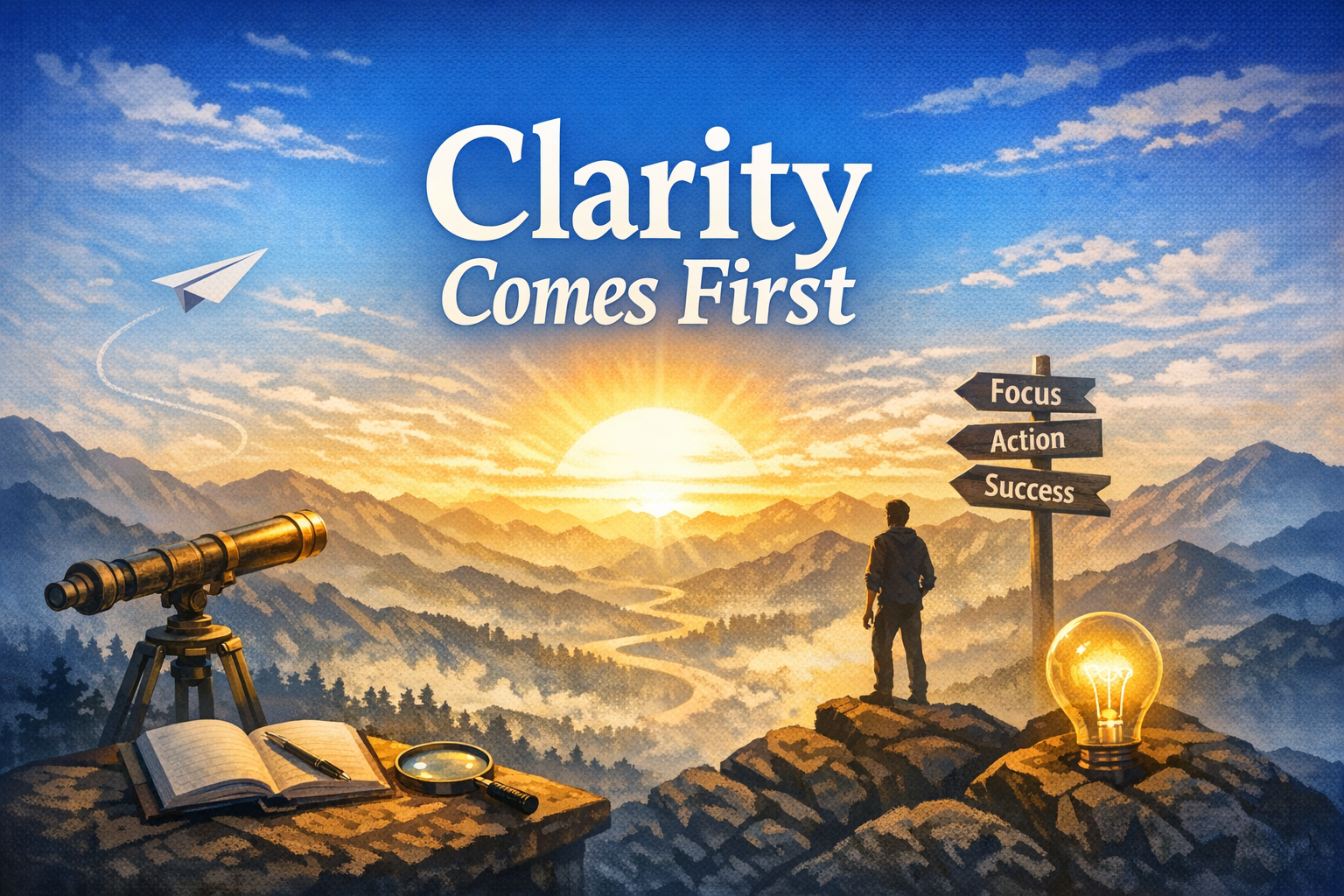
Clarity is not just a value I talk about. It is the first framework of CCM and one of the reasons the word appears so prominently in our name at CCM Consulting & Advisory Services. Over the years, working alongside small businesses and nonprofit organizations, I have learned that growth rarely fails because of effort or commitment. It fails because of confusion.
When leaders lack clarity, organizations drift. When teams lack clarity, execution slows. When operations lack clarity, good intentions turn into frustration. I built CCM Consulting & Advisory Services around the belief that clarity is the foundation that makes progress possible.
Clarity is not about having all the answers. It is about knowing who you are, why you exist, where you are going, and how you plan to get there. For small businesses and nonprofits, especially those operating with limited resources, clarity is not a luxury. It is a necessity.
Clarity as the Starting Point for Growth
Every organization I work with wants to grow. Growth might mean increasing revenue, expanding impact, strengthening internal systems, or developing future leaders. What many do not realize is that sustainable growth cannot happen without clarity first.
Without clarity, strategy becomes reactive instead of intentional. Decisions are often made in response to urgency rather than importance. Leaders find themselves constantly explaining, correcting, or revisiting the same issues. Teams are busy, but not always aligned.
When clarity exists, priorities sharpen. Tradeoffs become easier. Leaders gain confidence in saying yes to the right opportunities and no to distractions. Clarity allows growth to be purposeful rather than accidental.
Strategic Planning Depends on Clarity
Strategic planning is one of the most visible places where clarity shows up or does not. A strategic plan should not be a document that sits on a shelf. It should be a clear articulation of direction, priorities, and the metrics used to measure progress.
I often see organizations attempt strategic planning before they have clarified their mission, vision, values, and current realities. The result is a plan that looks good on paper but feels disconnected in practice.
Clarity ensures that strategy is aligned with purpose. It grounds planning discussions in shared understanding and honest assessment. Without clarity, strategic plans become optimistic wish lists. With clarity, they become practical roadmaps.
Organizational Development Built on Clear Roles and Systems
As organizations grow, complexity increases. New roles are created, responsibilities shift, and informal systems stop working. This is where organizational development becomes critical.
Clarity in organizational structure, roles, and decision-making authority prevents overlap, resentment, and burnout. People need to understand not only what they are responsible for, but how their work connects to the mission and to the work of others.
I have seen morale and performance improve quickly when leaders take the time to clarify expectations, workflows, and accountability. People want to do good work. Clarity gives them the confidence and direction to do so.
Talent Alignment, Onboarding, and Training
Hiring the right people is only half the equation. Aligning them effectively requires clarity from the very beginning.
Clear role descriptions, performance expectations, and cultural values are essential to talent alignment. Without them, even strong performers can feel unsure or disconnected. Onboarding becomes inconsistent. Training lacks focus. Feedback feels subjective instead of constructive.
When clarity is embedded into onboarding and training, new team members ramp up faster and integrate more smoothly. They understand not just what to do, but why it matters. Clarity builds trust, engagement, and retention.
Policies and Procedures That Support, Not Suffocate
Policies and procedures often get a bad reputation. In reality, structure is not the problem. The problem is unclear or misaligned structure.
Clear policies protect both the organization and its people. They provide consistency, reduce uncertainty, and support fair decision-making. When policies are rooted in clarity of values and purpose, they become tools for empowerment rather than obstacles.
For small businesses and nonprofits, well-defined procedures also create resilience. They reduce dependence on any one individual and make growth more sustainable.
Why Clarity Is the First Framework of CCM
Clarity comes first because everything else depends on it. Strategy, systems, people, and performance are all downstream from clarity.
As a consultant, my role is not to give answers that only work in theory. It is to help leaders see more clearly so they can make better decisions. When clarity is established, momentum follows.
Clarity is not a one-time exercise. It is an ongoing discipline. And it is the foundation on which strong, healthy organizations are built.
Clarity is not just the starting point of the CCM framework. It is the catalyst that turns vision into action and ambition into results. If any of this resonated with where your organization is today, I would welcome the chance to listen and share perspective. Sometimes a simple conversation is all it takes to bring things into focus.

About the Author
Scott CostelloFounder & CEO, CCM Consulting & Advisory Services
With 25+ years of experience in economic development, philanthropy, and civic engagement across Florida, Scott helps nonprofits and small businesses gain clarity, build capacity, and sustain momentum.
Get Started
Let's Build Something Together
Whether you're a nonprofit seeking strategic growth or a business ready to scale, CCM Consulting is here to help.