Your Employees Are Your Brand First
How Strong Internal Communications and Fractional Marketing Leadership Drive Culture, Retention, and Growth
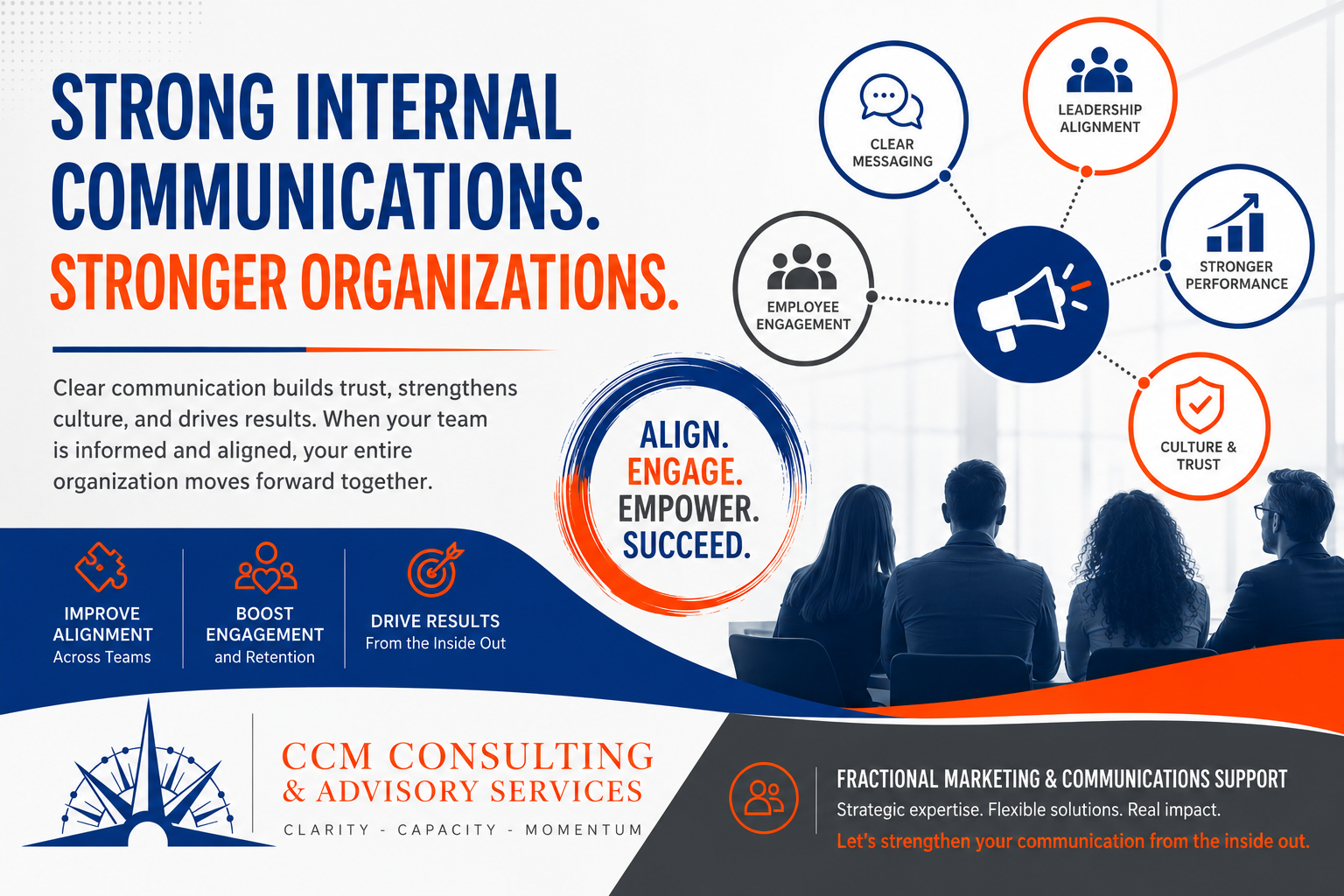
In many organizations, marketing and communications are often viewed as outward-facing functions. Companies focus heavily on branding, advertising, social media, media relations, and customer engagement. But one of the most overlooked drivers of organizational success is internal communications - the way companies communicate with their own employees, teams, leadership, and stakeholders.
The truth is simple: if your internal communication is broken, your external brand eventually suffers too.
Employees who feel disconnected, uninformed, or unclear about expectations cannot effectively represent your mission, culture, or customer experience.
Strong internal communication creates alignment, improves morale, reduces confusion, and ultimately drives better business outcomes. For small and mid-sized organizations, however, maintaining effective internal communications can be difficult. Many companies do not have a dedicated communications department or senior-level communications strategist on staff. That is where fractional marketing and communications support can provide tremendous value.
Internal Communications Is More Than Company Emails
When people hear "internal communications," they often think of company-wide announcements or HR memos. In reality, effective internal communications touches nearly every part of an organization. It includes:
- Leadership messaging and visibility
- Employee engagement initiatives
- Crisis communications
- Change management communication
- Internal newsletters and updates
- Team alignment and accountability
- Company culture reinforcement
- Onboarding communication
- Cross-department collaboration
- Staff recognition and morale-building
Strong internal communication helps employees understand not only what is happening within the organization, but why it matters.
When communication is inconsistent or unclear, organizations often experience avoidable problems:
- Employee frustration
- Increased turnover
- Workplace silos
- Declining morale
- Reduced productivity
- Misalignment between leadership and staff
- Resistance to change initiatives
In today's workplace, employees want transparency, clarity, and connection. Organizations that prioritize internal communication are often more agile, more collaborative, and more successful at retaining talent.
The Challenge for Small and Mid-Sized Organizations
Large corporations may have internal communications teams, HR departments, and communications directors dedicated solely to employee engagement and messaging. Smaller organizations rarely have that luxury. Instead, internal communications often becomes:
- An "extra task" for HR
- Something handled inconsistently by leadership
- A responsibility divided among multiple departments
- A reactive process instead of a proactive strategy
As a result, communication gaps grow over time.
At the same time, hiring a full-time senior-level communications executive may not make financial sense for every organization. Many companies need strategic expertise, but not necessarily a full-time six-figure position. This is where fractional marketing and communications support becomes increasingly valuable.
What Is Fractional Marketing & Communications Support?
A fractional marketing and communications professional works with organizations on a part-time, project-based, or strategic advisory basis. Rather than hiring a full-time executive, organizations gain access to experienced leadership and expertise at a more flexible investment level.
Fractional support can help organizations:
- Develop internal communications strategies
- Improve leadership communication
- Build employee engagement initiatives
- Create onboarding and training materials
- Strengthen organizational culture messaging
- Support change management efforts
- Align external and internal messaging
- Manage communications during transitions or crises
The benefit is not simply "extra help." It is strategic guidance from someone who understands how communication impacts culture, operations, leadership, and organizational performance.
Why Fractional Support Works
One of the greatest advantages of fractional communications support is flexibility. Some organizations need ongoing strategic guidance a few hours each week. Others may need short-term support during periods of growth, restructuring, leadership transition, or crisis management.
Fractional support can also bring an outside perspective that internal teams may struggle to see. Over time, organizations can become too close to their own communication challenges. An experienced communications professional can identify gaps, simplify messaging, and create systems that improve consistency and clarity.
Additionally, fractional professionals often bring cross-industry experience and best practices from working with multiple organizations. This can help businesses modernize communication strategies without the cost of building an entire department internally.
Internal Communication Impacts External Reputation
One of the most important things organizations forget is that employees are often the strongest ambassadors - or critics - of a company's brand. Culture starts internally.
When employees feel informed, appreciated, and connected to the mission, they naturally communicate that positivity externally. Customers notice. Partners notice. Communities notice.
On the other hand, poor internal communication eventually creates external problems:
- Negative online reviews
- Recruiting challenges
- Customer service inconsistency
- Leadership distrust
- Reputation damage
Organizations that invest in internal communications are not simply improving employee morale. They are strengthening the foundation of their brand.
Final Thoughts
Effective communication is no longer optional for organizations that want to grow, retain talent, and maintain strong cultures. Internal communications directly impacts employee engagement, operational success, and brand reputation.
For many small and mid-sized organizations, fractional marketing and communications support offers a practical and strategic solution. It provides access to experienced leadership without the commitment of a full-time executive role.
At the end of the day, organizations succeed when people feel connected to the mission, informed about the direction, and empowered to contribute. Strong internal communication helps make that happen, and the right strategic support can make all the difference.
Organizations do not need to hire a full-time communications executive to strengthen internal communication and employee engagement. Sometimes an outside perspective, strategic guidance, or fractional leadership support can help identify gaps, improve alignment, and create more effective communication systems across the organization.
If your organization is navigating growth, change, communication challenges, or employee engagement concerns, now may be the right time to evaluate whether your internal communications strategy is truly supporting your culture and goals.

About the Author
Scott CostelloFounder & CEO, CCM Consulting & Advisory Services
With 25+ years of experience in economic development, philanthropy, and civic engagement across Florida, Scott helps nonprofits and small businesses gain clarity, build capacity, and sustain momentum.
Get Started
Let's Build Something Together
Whether you're a nonprofit seeking strategic growth or a business ready to scale, CCM Consulting is here to help.